NewgenONE Platform
AI-first Dynamic Case Management for Diverse Business Needs
Streamline case-related content, workflows, and communications with AI-driven dynamic case management. Create an intelligent, adaptive environment that enables real-time decision-making, improves process efficiency, and delivers personalized experiences for large enterprises.

Why Should Enterprises Adopt AI-first Dynamic Case Management?
A Dynamic Case Management (DCM) system empowers knowledge workers to collaborate effectively and respond in real time to opportunities and unexpected situations while managing complex cases. The AI-driven capabilities of NewgenONE enable comprehensive handling of case-related information, documents, and communications from a single platform, ensuring agility, compliance, and faster decision-making across industries.
How Can AI-first Dynamic Case Management Transform Your Business?
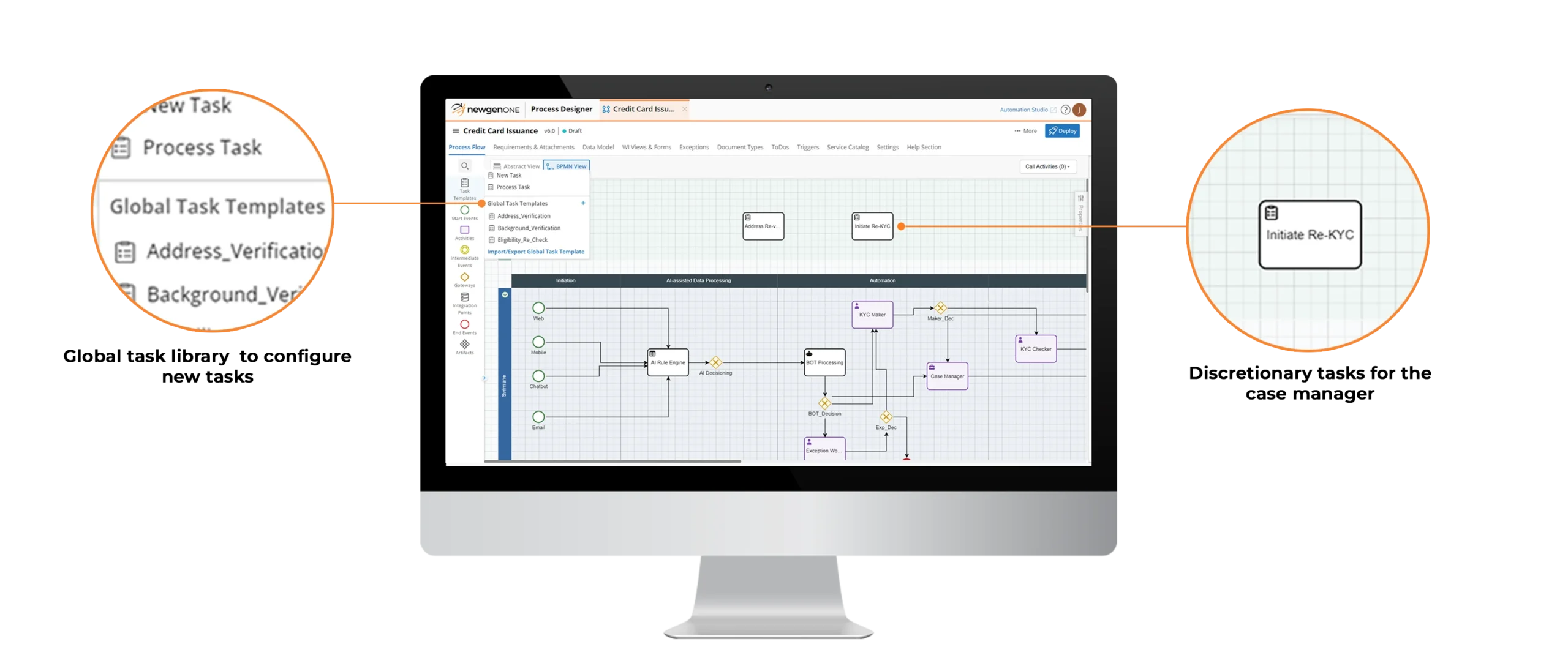
Enterprise-grade Case Configuration for Smarter Operations
AI-powered case creation and configuration using a global task library for faster deployment and scalability.
Design and deploy synchronized, ad hoc processes and alter case routing structures to handle unprecedented situations
Seamless Task Creation and Execution with AI-Powered Automation
Flexibility to execute discretionary tasks based on evolving business goals and priorities.
Create ad hoc tasks dynamically during runtime to manage unexpected scenarios and ensure process continuity.
Ensure compliance and consistency with CMMN 1.1 standards, enabling transparent and efficient case management across complex workflows.
Empower Enterprise Teams with AI-based Collaborative Decision Tools
Unified case file with all case-related data, including tasks, documents, forms, to-do lists, and communications—for real-time case visualization and management.
AI-powered real-time case sharing and collaboration to enable faster, smarter decision-making across teams and stakeholders.
Enterprise-grade flexibility to handle exceptions in long-running processes involving multiple stakeholders, ensuring agility and compliance.
Enterprise-grade Visibility and Insights Powered by AI
AI-driven real-time case lifecycle visualization for enhanced tracking, monitoring, and process transparency.
AI-powered insights into case and task worker performance to identify bottlenecks and optimize workflows.
Automated notifications for task initiation, completion, reassignment, decline, and failure through system-generated alerts for better governance.